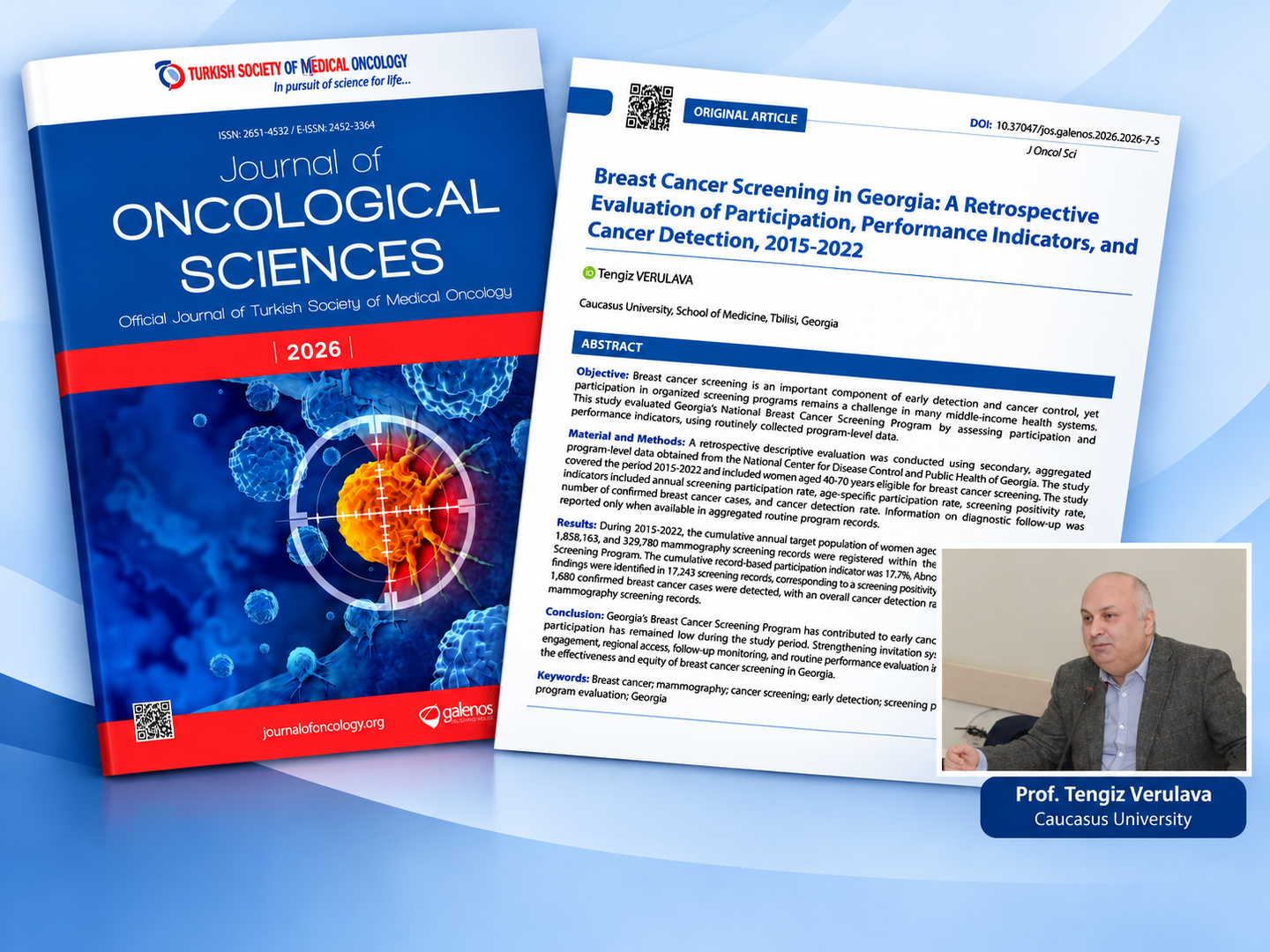
A scientific paper by Caucasus University Professor Tengiz Verulava has been published in the internationally peer-reviewed journal Journal of Oncological Sciences. The article is entitled “Breast Cancer Screening in Georgia: A Retrospective Evaluation of Participation, Performance Indicators, and Cancer Detection, 2015–2022.”
The study aimed to evaluate Georgia’s national breast cancer screening program by analyzing screening participation, program performance indicators, and breast cancer detection outcomes.
The study is based on data from the National Center for Disease Control and Public Health of Georgia for the period 2015–2022 and covers the screening program designed for women aged 40–70.
Key Findings
-
A total of 329,780 mammographic screening records were registered under the national program between 2015 and 2022.
-
The screening participation rate was 17.7%. This figure was calculated based on the total number of mammographic examinations conducted during 2015–2022. Since some women underwent screening more than once during this period, 17.7% does not represent the proportion of women who participated in the program.
-
Abnormal or suspicious findings were identified in 17,243 screening records (5.2%).
-
A total of 1,680 cases of breast cancer were confirmed through the program, corresponding to approximately 5.1 cases per 1,000 mammographic screening records.
-
The highest screening participation rate was recorded among women aged 50–59 (21.5%), while the lowest was observed in the 40–49 age group (14.2%).
The study found that despite the existence of a national breast cancer early detection program, screening participation remains low. This limits the program’s potential to facilitate timely diagnosis and improve population health outcomes.
Particular attention is given to the need to strengthen the organizational mechanisms of screening. The author recommends developing organized invitation and reminder systems, increasing the active involvement of primary healthcare physicians, improving access to screening services in regional areas, and introducing systematic monitoring of the diagnostic process.
The findings provide an important scientific basis for the further development of Georgia’s national breast cancer screening program and contribute to the formulation of evidence-based healthcare policy.
The scientific journal *Journal of Oncological Sciences